


Plinths, Cornicing and Pelmets

Introduction
Fitted kitchens are designed to completely fill a given space with no gaps or breaks. To tie the whole kitchen together, plinths, cornicing and pelmets are used to give the impression of a long continuous piece of furniture rather than individual cabinets.
Cornicing & pelmets
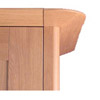
A strip of cornicing and pelmet is usually added respectively to the bottom and top outside edge of wall cabinets. Usually made in the same finish as the cupboards themselves, the pelmet is also very useful for hiding worktop lighting.
Cornicing and pelmets are available in strips of various length that should be cut to size and mitred to run round the visible perimeter of the cupboards.
Plinths
A plinth, or kickboard, is often added along he bottom edge of the base units, to make them appear to stand directly on the floor, and give the kitchen a solid finished look. While these are often applied in a material that matches the cupboards, using contrasting materials such as stainless steel can add an interesting modern twist to a kitchen.

Alternatively, it’s becoming increasingly popular nowadays to do away with plinths entirely and instead make a feature of the cabinets’ legs. With the help of lighting under the units in particular, this can create a more open look in the room, making it feel more spacious.

Whether you choose plinths or legs, or combination of the two, plinths are available in range of heights and lengths to be cut to size, while unit legs are height adjustable to account for any irregularities in the floor surface.
Further information and useful links
- Find a Kitchen Units supplier near you
- Find a Kitchen Fixtures & Fittings supplier near you
- Find a Kitchen Planner near you
- Find a Kitchen Fitter near you
- Find a Carpenter near you
- Find an Electrician near you
Site Pages
Featured Articles