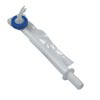
SimplifyDIY Logo
One Click Registration!
 
It's free!

How to Cure Water Hammer


Introduction

That loud, irritating banging noise that emanates from your plumbing pipework is called ‘water hammer’. It’s caused either by turning a tap off quickly, or by fast-acting valves on appliances, which draw a sudden halt to the movement of water through the pipes.

If the pressure in the system is high the water has a great deal of momentum, and when bought to a sudden halt it causes the pipes to shudder and vibrate, making something of a racket in the process.

The vibration of the pipes is not only annoying, but can allow splits and cracks, particularly at joints, to develop, so it is always advisable to address the situation as soon as possible.

Before commencing work, make sure you have all the tools you need to successfully complete the job. Use the following link for a list of basic plumbing tools:


There are three ways to eliminate water hammer and you can use some or all of these approaches:

Firmly afix pipework

Ensure pipework is clipped, secured and supported at regular intervals using pipe clips of the appropriate size.


Washers & valves

Ensure washers and diaphragms in ball and float valves are functioning properly.

The valves that control water flow into a toilet cistern or a cold water storage tank can become worn so that they cannot withstand the water pressure in the pipework.

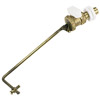
Fit a Torbeck valve to a toilet cistern


…and check the ball valve in your water storage tank is working properly.


Pressure restrictor

  • You may read plenty of advice to fit a pressure-reducing valve to your incoming mains water supply. We DO NOT recommend this approach as it will simply reduce water flow and won’t address the main cause of the problem.

Instead, a pressure restrictor should be added. There are two ways of doing this:

  • A 30cm (12in) length of vertical pipe should be added to the existing pipework via a T-joint as close to the source of the hammer as possible.
  • The other end of this pipe is capped off, and it is filled with air which acts as a shock absorber.
  • Unfortunately, this air will eventually dissolve in the water such that hammer will return unless the whole system is drained periodically to allow air back in.
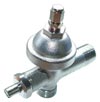

Water Hammer Arrester

Working on exactly the same principle, but for a more permanent solution, install a water hammer arrester as close to the source of the problem as possible. This includes a body of air which is isolated and sealed from contact with water so that it remains effective ongoing.


Further information and useful links


Send this article to a friend

Do you know somebody who is improving their home, if so why not share the resources of simplifydiy.com with them.

Refer a friend Click here to send this article to a friend
 
Bookmark this article
AddThis Social Bookmark Button
 

Comments on this article
i shouldve mentioned all this in one comment...
Sun 20th Apr 2008
 
louise
we've lived here eleven years, and the hammer thing is new. we've not had any recent work done. the pipes (where we can easily access them) seem reasonably well-clipped.

we have two toilets.
the downstairs one sometimes makes a very loud noise when flushed. this is fairly new. but it doesn't ALWAYS make the horrible noise - just now and then.

turning taps on and off causes waterhammer. this is relatively new, too.

so we have three water problems:

1. taps
2. a noisy toilet flush not sure if it's waterhammer as such)
3. the mystery waterhammer, that can even happen when we're all in bed at night.
 
 
Sun 20th Apr 2008
 
louise
and we don't know any good plumbers. :(
anyone know any good plumbers in the york area?!
 
 
Sun 20th Apr 2008
 
louise
Quote:
In my case the hammering can persist all day long at regular intervals, sometimes every few minutes, when there is no tap or ballvalve activity anywhere on the system. It can be all through the night! Any ideas as to what's causing this?

It's the same for us! It's driving me mad with worry. I can't find the source or the cause - but several times a day, and/or at night when everything is turned off, we hear a waterhammer 'clunk' from somewhere in the house.

We live in a detached house, so other users are ruled out.

Just wondered if you got to the bottom of your probelm - it might give us a clue what to do. I'm petrified a pipe is gonna sheer off/leak everywhere.
 
 
reply
Thu 13th Mar 2008
 
alanpatt
I've just had a new heating system fitted and the sound of a steam engine pervaded the house after turning off any of the cold water taps, no matter how slowly we did it. A bit of thinking and confirmation led me to the ball float in the (new) main water tank. Basically as the pressure of the cold water on the valve seat changed it started the ball bouncing up and down on the water surface.
Dead simple solution; got a bit of plastic and bent it 90° to form an underwater vane. Drilled an 8mm hole in one end of the plastic and clamped it onto the valve rod via the ball. The underwater part of the vand prevents ball bounce while still allowing proper function of the float.
 
 
Reply
Sat 9th Feb 2008
 
SimplifyD..
That certainly is strange, but if your property is a house that has been converted into flats, it's possible that your plumbing systems are not completely isolated from one another (particularly if your not on a metered water supply). Changes in pressure in your neighbours' properties can therefore effect your own system.
Whatever the source of the problem, the solution remains much the same as detailed above, so wherever possible afix your pipework and ensure that your own valves are working properly.
 
 
Hammer in stationary water?
Thu 7th Feb 2008
 
Anonymous
In my case the hammering can persist all day long at regular intervals, sometimes every few minutes, when there is no tap or ballvalve activity anywhere on the system. It can be all through the night! Any ideas as to what's causing this?
 
 
This is the right way to do it
Wed 9th Jan 2008
 
Anonymous
Brilliant advice. Most commonly it will be a worn or broken valve (typically ballcock valve), but also possible are loose pipes moving too much and banging against things like cupboards. But if these two check out, the best advice is to fit the water hammer arrestor to absorb the high pressure pulse. You can check in advance whether it will do the trick by draining the system and when refilling, leave a spur with air in it, for example do not bleed the air out of a length running to a washing machine valve. If the hammer goes away until you bleed this spur, you know the solution will work.
 
 
One click Register Now to add your own comment
Basic Details

Email
Postcode

Optional Details

Password
Confirm Password
Username


Tick this box to recieve our newsletter 'The Torch'. We will not share your details with any 3rd parties, please refer to our privacy policy for further details
Further secure
your account with a password
Enter a username to accompany your reviews


Site Pages

Rising Gas & Electricity prices!


PTIME1: 0.26891112327576 KW: water-hammer|mains-water-systems|plumbing-and-heating