


Choosing The Right Power Drill

Introduction
An electric drill is often the only power tool that the average home improver owns as it’s vital for making holes in wood, masonry and metal to complete just about any significant DIY task. They’re often useful for tightening and loosening screws too, making them great time-savers.
There are a number of factors to consider when making your selection, and power drills can vary considerably in price from just £20 to a whopping £500.
If you’re planning on drilling just a few small holes into timber every now and then, one of the cheaper options may be just the ticket, but if you need to make more regular use of the drill, cutting large holes into hard materials such as masonry, your money will be better invested on a more expensive model that will last you longer.
- Click on product description below to purchase the item from screwfix.com, who deliver in 24 hours - hover over the picture for a full description.
Corded drills
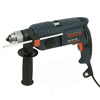
Corded drills are powered by an electric cable that must be plugged into a nearby socket, so they can’t be used just anywhere, but they are generally more powerful than their cordless counterparts.
- SimplifyDIY Recommended Buy: Bosch GSB18-2RE Impact Drill 230V
Cordless drills
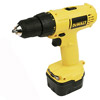
A cordless drill is powered by a battery and can be used anywhere, until its energy reserves are depleted. It’s therefore very useful to have a spare charged battery pack than can be used while the other one is charging (usually taking anything from 1 to 5 hours). Nickel-metal-Hyride (NiMH) batteries are the best option as they are smaller, run longer and pollute less when they’re disposed of than Nickel-Cadmium (NiCd) batteries.
- SimplifyDIY Recommended Buy: DeWalt DW907K2V 12V Drill Driver
Angle drills
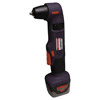
Angle drills have the main body of the drill angled at 90 degrees to the chuck so that they can fit into confined spaces. Usually with a fixed head, but some models have a head that can be moved to a range of angles.
- SimplifyDIY Recommended Buy: Sparky BA12 12V Angled Drill
Common drill specifications
Power
Power is measured in watts (W) for a corded drill or volts (V) for a cordless drill. A drill with more power will generally be manufactured from more robust materials so it can be used to drill large holes into tough surfaces and suffer less wear and tear. However, the trade-off for additional power is additional weight.
Speed
Speed is measured in rpm and is usually quoted as the maximum that the drill can achieve. Higher speed is not always preferable; large holes and hard materials such as metals and masonry should be drilled slowly to prevent the bit from overheating, while small holes and wood should be drilled quickly to produce a clean edge.
Modern drills thus either have a couple of fixed speeds (or gears) to choose from and/or they include variable speed, controlled by the degree that the trigger is pulled. Screwdriving requires a slow speed, and the drill should also have a reverse gear allow you to undo screws.
Chuck capacity
Chuck capacity refers to the maximum diameter of a drill bit shaft that the chuck can accommodate. Normally chuck sizes are 10mm (⅜in) or 13mm (½in), where the larger size usually has a more powerful motor.
The type of chuck determines how the drill bits are held in place in the drill. A traditional drill requires a separate chuck key to open and close the jaws of the chuck, while a more modern keyless chuck can be operated by manually twisting (rather like administering a Chinese burn!), with the added bonus that you can’t lose the key.
For the true enthusiast, an SDS chuck (slotted drive system) eliminates the possibility of bit slip and therefore requires no tightening since drill bits are simply pushed in and released by pulling the collar back, although specialised SDS drill bits must be used.
Torque
Torque is a measure of turning force, measured in Nm. A drill with high torque will be able to begin turning slowly to allow you to keep a hole neat and prevent the bit from slipping.
Some drills also include a torque control function that shuts the drill off when a certain turning force is reached, preventing you from over-tightening or drilling out a screwhead.
Clutches
Clutches are included to prevent over-tightening of screws, as the drill shaft is disengaged from the motor at a certain resistance. Clutches usually have a number of settings, the lowest ones being for small screws and the highest for large screws.
Hammer action
Hammer action (also called pneumatic or percussion drills) is brought about by the chuck rapidly moving in and out so that the drill can break into tough substrates such as bricks and masonry using both turning and hammering force.
Some drills also include chiselling action that can be used to remove plaster and perform minor demolition work. These functions can usually be turned off, but be sure to use drill bits that are specifically manufactured to withstand the hammer or chiselling force when these functions are turned on.
Drill attachments
Most drills have a pistol grip where the speed control trigger is mounted, however an additional handle mounted behind the chuck in line with the first grip or a 90 degrees to it is very useful for holding the drill steady and adding pressure to the drilling force.
A drill or depth stop can also be fitted to ensure you drill holes of just the right depth.
Further information and useful links
- Find a Power Tools supplier near you
- Find a Builders Merchants near you
- Find a Tool Hire Centre near you
Site Pages
Featured Articles