


Kitchen Floor Plans

Introduction
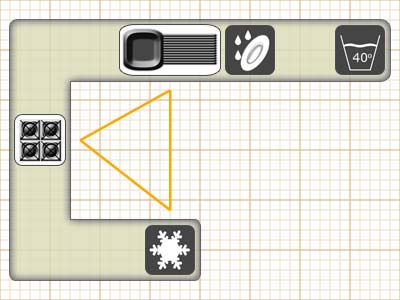
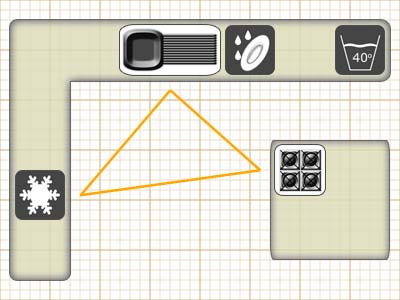
There are three key zones to a kitchen which professional kitchen planners aim to link together by creating a ‘working triangle’. These areas are;
- Food storage & preparation – fridge and worktop
- Cooking – oven and hob
- Cleaning up – sink and dishwasher
The total length of the three sides of this triangle should be between 3.6m (11ft 9in) and 6.6m (21ft 6in) to create the optimal working space.
This requirement means that the locating of desired appliances should be considered before the base units are fitted around them. With this in mind, kitchens are generally laid out in one of five distinct floorplans, as shown below;
Straight Line
In very narrow rooms, it may only be possible to fit a single run of cupboards and appliances. While a working triangle cannot technically be achieved, the three key zones should group all related pieces of equipment together to optimise the working surfaces.

Galley
An economical layout that is particularly useful in slim rooms which require entry and exit at both ends. Be sure to allow at least 1200mm (3ft 11in) between the front edges of each run of cupboards to allow for drawers and doors to open and ease of passage.

L-Shaped
This is a popular layout that makes for a user-friendly and uncluttered kitchen, while generally leaving space for a dining area too.

U-Shaped
Where no through traffic need be allowed, a U-shaped kitchen creates an efficient workspace where all areas are within easy reach, and also often includes the bonus of a good expanse of worktop. Remember to ensure that the two parallel runs of cupboards are at least 1200mm (3ft 11in) apart to allow for drawers and doors to open and ease of passage.
Island
Islands occupy quite a bit of space so often require a fairly large room to allow succesful integration. That said, they very neatly reduce the amount of walking that needs to be done in such a large kitchen.
Islands may be 600mm (2ft) deep, but most often they are 900mm (3ft) deep, providing useful additional work or dining space.
If services are carried to the island, they can also accommodate hobs or sinks. Be sure to leave 1200mm (3ft 11in) between the face of the island and any other cupboard or appliance to allow for drawers and doors to open, and for ease of passage.
Further information and useful links
- Planning a new kitchen
- How to design your new kitchen layout
- Designing a safe kitchen layout
- Low cost kitchen refurbishment
- More kitchens topics
- Find a Kitchen Planner near you
- Find a Kitchen Worktop supplier near you
- Find a Kitchen Units supplier near you
Site Pages
Featured Articles