


Choosing the Right Ladder

Introduction
Plenty of DIY jobs need to be done above shoulder-height and it’s almost impossible to achieve a good finish if you can’t get to the right height to do the job properly. Standing on a chair just doesn’t cut it!
As with all things, there are a number of different types of ladders, available in a range of materials and sizes, so selecting the right one can be somewhat tricky. If you buy a good quality ladder the first time you make the purchase, it can reward you with a lifetime of service. Click on the following link for a full buying guide to the types of ladders available on the market.
Which material?
Ladders are manufactured from wood, aluminium or fibreglass, each of which has its advantages and disadvantages:
Wood
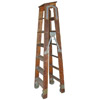

- Does not conduct electricity when dry
- Does not conduct heat or cold

- Requires careful storage to avoid rotting in damp conditions or splitting in dry conditions
- Can be subject to wear under intensive use, unless protected and maintained with varnish
- Heavier than aluminium equivalent
Aluminium
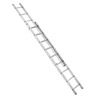
- High tensile strength and lightweight
- Resistant to weathering and aging
- Will dent, but won’t crack or chip
- Conducts electricity very effectively
- Conducts heat rapidly
- Severely weakened on exposure to extreme heat
Fibreglass
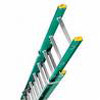
- Does not conduct electricity when dry
- Maintains much of its strength after sever heat exposure
- Self-extinguishes when a direct flame is removed
- Resistant to weathering and aging
- Heavier than aluminium equivalent
- Can chip or crack on severe impact
- Often more expensive than aluminium equivalent
British and European Standards
Stepladders, ladders and loft ladders are manufactured to satisfy specific applications and levels of use, so make sure you select a ladder that meets the standard suitable for your needs.
Rather confusingly, ladders are categorised through several overlapping means including British Standards which have ‘Duty Ratings’, while European standards quote the Maximum Static Vertical Loads (MSVL). The latter are most reliable, being the maximum weight that may be put on the ladder, including the weight of the user and their tools and materials.
Domestic DIY
- BS 2037 Class 3 (Aluminium) or BS 1129 Class 3 (Wood)
- MSVL = 125kg (19½ stone)
- Duty Rating = 95kg (15 stone)
Trade Use
- EN131, BS 2037 Class 2 (Aluminium) or BS 1129 Class 2 (Wood)
- MSVL = 150kg (23½ stone)
- Duty Rating = 115kg (18 stone)
Heavy Industrial Use
- BS 2037 Class 1 (Aluminium) or BS 1129 Class 1 (Wood)
- MSVL = 175kg (27½ stone)
- Duty Rating = 130kg (20½ stone)
Loft ladders are categorised by their own standards:
- BS 7553 Class G for general, infrequent use
- BS 7553 Class H for heavy-duty, regular use
What length of ladder?
Choosing a ladder of the right length is crucial to ensure that you do not overstretch when working; falls cause the greatest proportion of Accident & Emergency admissions in the UK, and 50 deaths each year are caused by ladders!
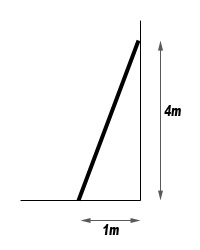
Remember that no ladder is intended to be used in a completely vertical state; for every 4 measures vertically, the ladder must be angled outwards by 1 measure (ie. a 1:4 ratio), and you should always allow for at least three rungs to extend above the height at which you plan to stand, giving you something to hold on to.
 | Height of Work | Ladder Length Required |
Upto 3 Metres | 4 Metres | |
Upto 6 Metres | 7.5 Metres | |
Upto 10 Metres | 11.5 Metres |
Further information and useful links
- Find a Tool Hire Centre near you
Site Pages
Featured Articles